Current Trend of Using Ceramic Membrane Filtration for Swimming Pools – Pool Tech Services

Ceramic membrane filtration is becoming increasingly popular in the swimming pool industry, primarily driven by operating cost savings versus traditional media bed filtration. However, there are other benefits (and drawbacks) to consider. The wet leisure industry should be looking at all technological advancements to strive towards sustainability targets whilst ensuring the main aim of safe and clean water quality standards. Now that we are seeing new build public pools adopt ceramic membrane filtration, will this become the standard in the near future?
The Pros and Cons of Ceramic Membrane Filtration for Swimming Pools
Maintaining a clean and safe swimming pool is essential for both enjoyment and health. One of the advanced methods of water treatment gaining popularity is ceramic membrane filtration. This technology offers several benefits but also comes with some drawbacks. Let’s dive into the pros and cons of using ceramic membrane filtration for swimming pools.
PROS:
Energy Saving: Manufacturers have real-world data showing that ceramic filters save on operator running costs. The reduced head loss through these filters means that circulation pumps can be run at lower powers while keeping flow rates the same. Furthermore, backwashing of these filters uses significantly less water than media filters, which saves not only on water but the cost to heat and treat the water.
Superior Filtration Efficiency: Ceramic membrane filters can remove particles as small as 3 microns, including bacteria, pathogens, and viruses. This results in exceptionally clean and safe water, providing a healthier swimming environment.
Durability and Longevity: Ceramic membranes are known for their durability. They can withstand harsh conditions and have a longer lifespan compared to traditional filters. This means fewer replacements and lower long-term costs.
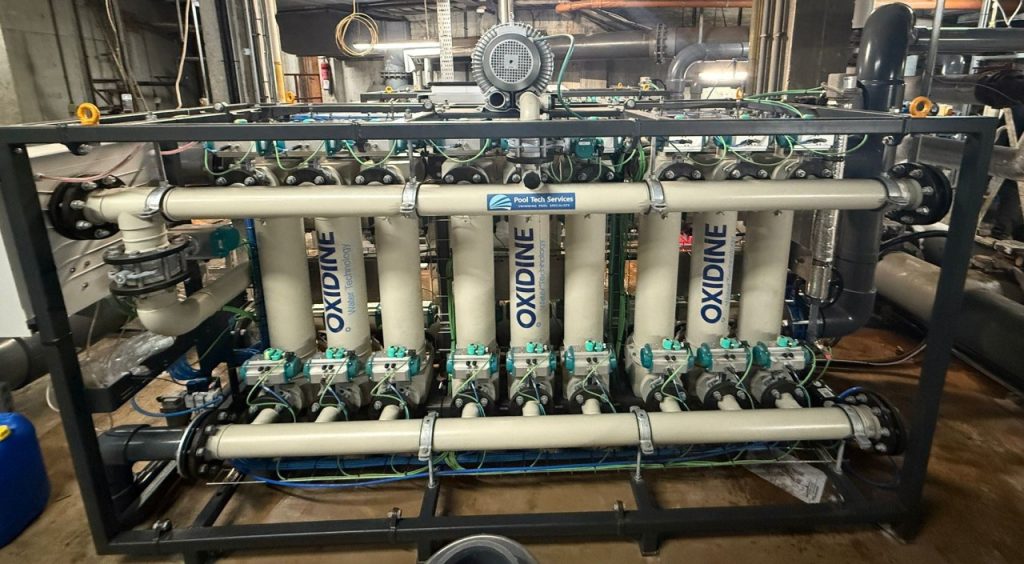
Reduced Footprint: The filters are more compact than traditional media filters and typically no wider than single door access. Reducing the plant room space on a new build or making retrofitting in an existing plant room much easier. Further to this, the modular design of these filters allows them to be built on site when access is extremely limited.
Chemical Resistance: These filters are resistant to chemicals commonly used in pool maintenance, such as chlorine. This resistance helps maintain the integrity of the filter over time, ensuring consistent performance.
Eco-Friendly: Ceramic membranes require less frequent replacement and can be cleaned and reused multiple times. This reduces waste and is more environmentally friendly compared to disposable filter media.
Automation: The current systems in the market are fully automated and therefore require minimal operator interaction. Even functions such as backwashing, weekly or monthly chemical cleans are fully automatic.
CONS:
Higher Initial Cost: The upfront cost of ceramic membrane filtration systems is generally higher than traditional sand or cartridge filters. This can be a significant investment for pool owners.
Potential for Clogging: Due to their fine filtration capability, ceramic membranes can clog more easily with debris. This necessitates regular cleaning to maintain efficiency.
Complex Maintenance: While ceramic membranes are durable, they require specific cleaning procedures to avoid damage. This can be more complex and time-consuming compared to other filter types. As this is a specialist piece of equipment, any maintenance will likely require the manufacturers.
Limited Availability: Ceramic membrane filtration systems are not as widely available as traditional filters. This can make finding replacement parts or professional maintenance services more challenging. With a limited number of manufacturers, is the market competitive yet?
Alternatives: There are other options where manufacturers offer similar levels of improved water quality and reductions in energy consumption, such as Regenerative Media Filters or AFM® glass media.
What Factors Should I Consider Before Choosing Ceramic Filtration?
When considering ceramic membrane filtration for your swimming pool, it’s important to evaluate several factors to ensure it meets your needs and preferences. Here are some key considerations:
Pool Size and Usage: Larger pools or those with high usage may benefit more from the superior filtration capabilities of ceramic membranes.
Initial and Long-Term Costs: Ceramic membrane systems have a higher initial cost but can offer long-term savings due to their reduced running costs and lower maintenance needs.
Maintenance Requirements: Consider the complexity and frequency of maintenance. Ceramic membranes require specific cleaning procedures to maintain efficiency.
Water Quality Goals: If you prioritise exceptionally clean and safe water, ceramic membranes are highly effective at removing fine particles, bacteria, and viruses.
Environmental Impact: The reusability and longevity of ceramic membranes can make them an eco-friendly option compared to some media filters. No need to periodically replace filter sand.
Availability and Support: Ensure that replacement parts and professional maintenance services are readily available in your area.
Compatibility with Existing Systems: Check if the ceramic membrane system is compatible with your current pool setup, including the pump and other filtration components.
Conclusion
Ceramic membrane filtration offers excellent water quality whilst reducing operating costs, making it an attractive option for swimming pool operators. However, the higher initial cost and maintenance complexity are important considerations. By weighing these pros and cons, you can determine if ceramic membrane filtration is the right choice for your pool.